
ASUS ROG Zephyrus G14 (GA401Q)
Motherboard Repair Case Study
Recovering high-performance gaming hardware from fatal short circuits caused by localized liquid metal compound migration.
Book a Repair TodayThe Intake & Customer Report
The device arrived via our nationwide mail-in repair service completely dead with no signs of life.
When connected to the OEM charger, no status indicators illuminated, there was zero fan spin, and the motherboard pulled no current from the bench power supply. Fundamental isolation testing confirmed that external charger voltages and the DC jack were working perfectly. The issue was definitively isolated to a component-level motherboard failure.
Advanced Motherboard Diagnostics
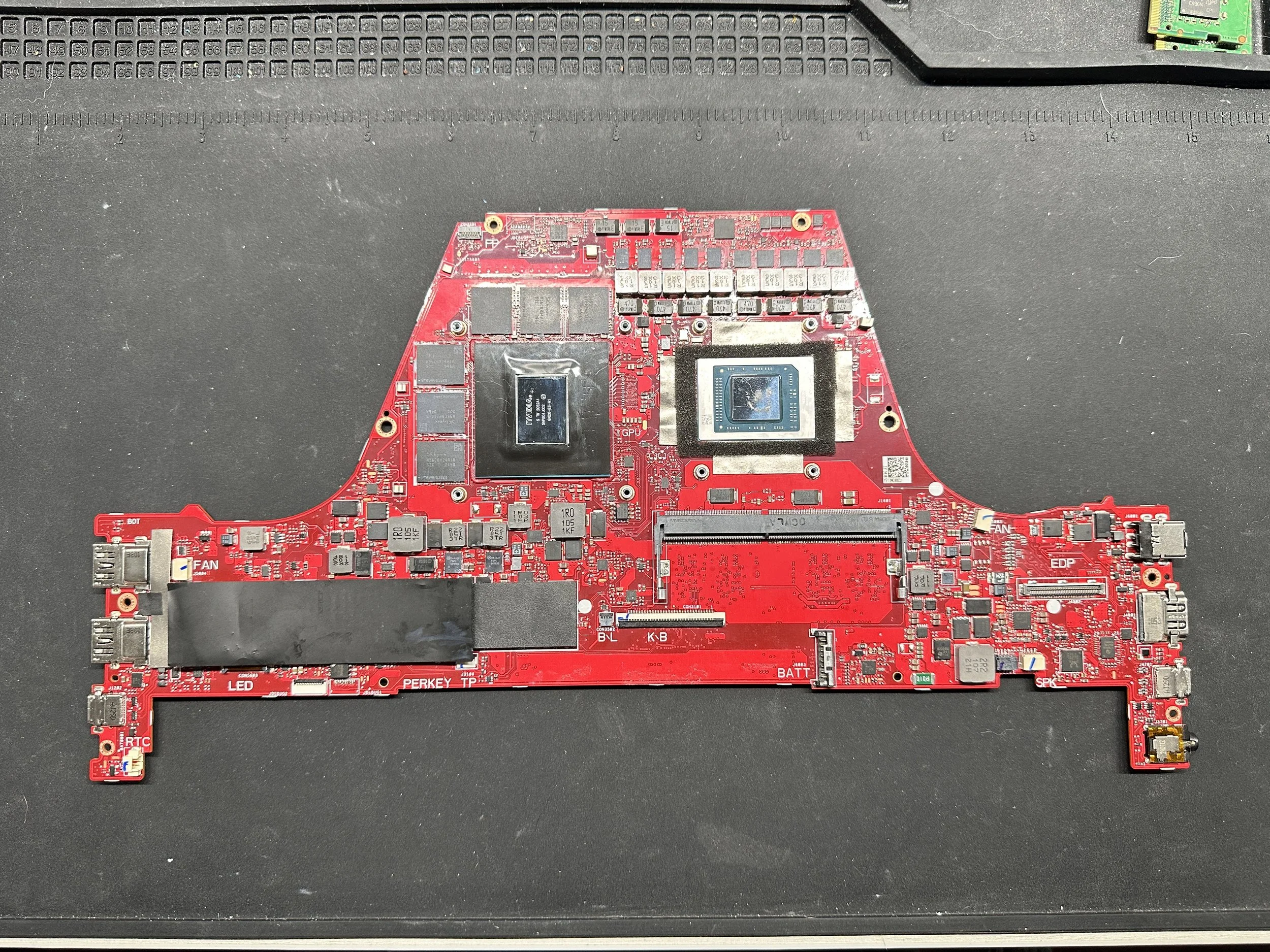
Our technicians extracted the main logic board and inspected the power generation paths under a microscope. The underlying structural failure immediately became apparent beneath the CPU cooling assembly.
The Danger of Liquid Metal Conductive Pastes
The ASUS ROG series utilizes factory-applied liquid metal to maximize heat dissipation. Unlike traditional silicon compounds, liquid metal is highly conductive. Over time, or due to physical pressure shifts, this fluid alloy can breach its protective foam gasket layer.
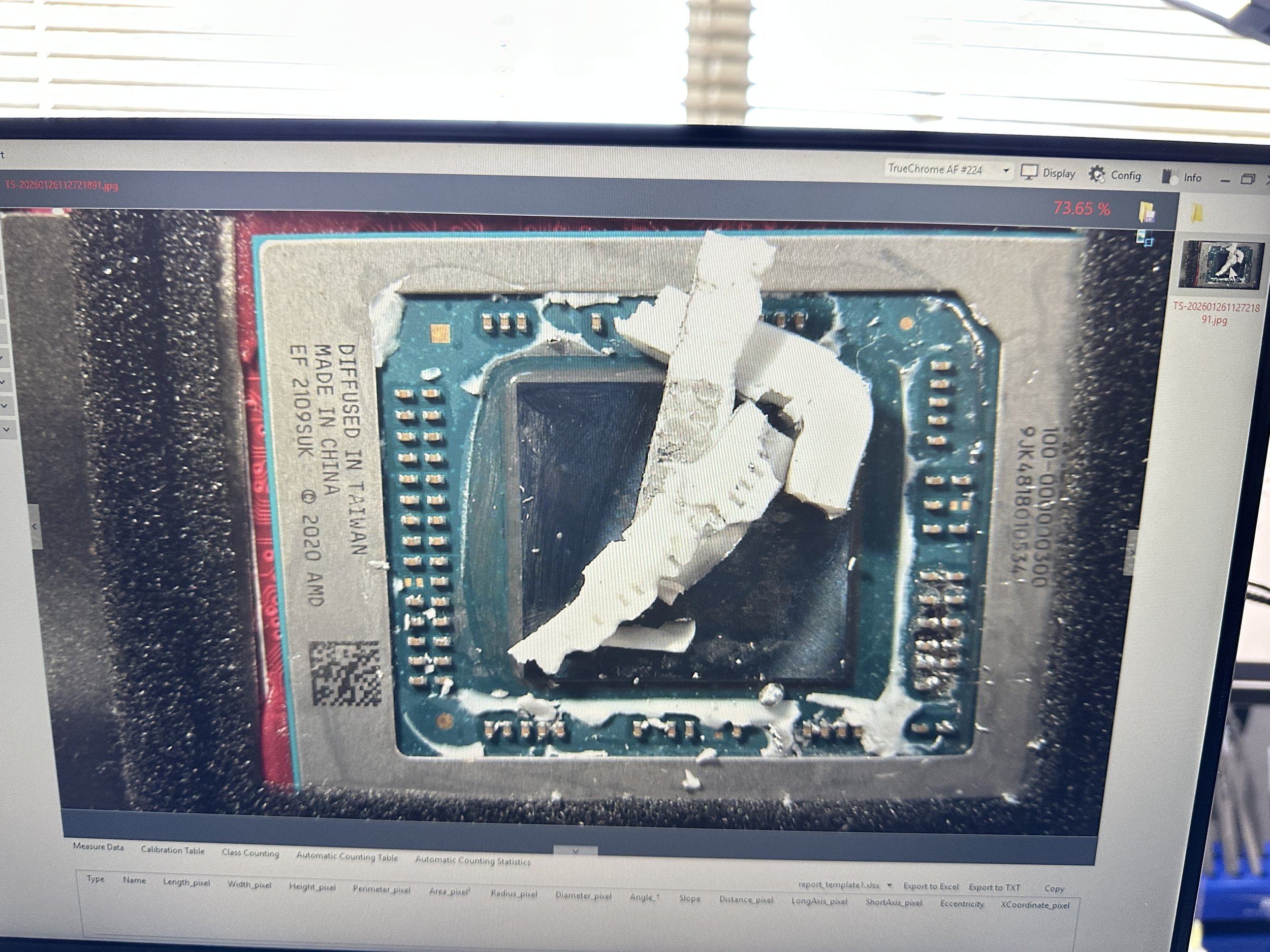
On this specific motherboard, leaked liquid metal had pooled directly onto the surface-mounted device (SMD) bypass capacitors surrounding the main CPU core die. This conductive bridge created a direct low-resistance short circuit, triggering the motherboard's Overcurrent Protection (OCP) circuit and completely shutting down system power delivery.
The Repair and Restorative Process
To safely resolve the short without destroying the sensitive processor, our technicians performed a surgical repair workflow:
-
1Microscopic Cleansing & Neutralization
The rogue liquid metal compound was carefully wicked away using specialized anti-static chemical cleaners and high-density foam swabs to ensure zero residue remained.
-
2Sub-Component Inspection
The affected SMD capacitors were measured using a digital multimeter to confirm the short circuit was fully cleared and no parts permanently failed under the load.
-
3Barrier Reinforcement
The original insulation barrier surrounding the CPU was reinforced with a thin layer of UV-curable solder mask, creating an impenetrable wall against future migration.
-
4Re-Thermalization
High-grade, stable thermal compound was cleanly reapplied over the silicon dies before safely re-seating the copper vapor chamber assembly.
Testing, Stability, and Final Validation
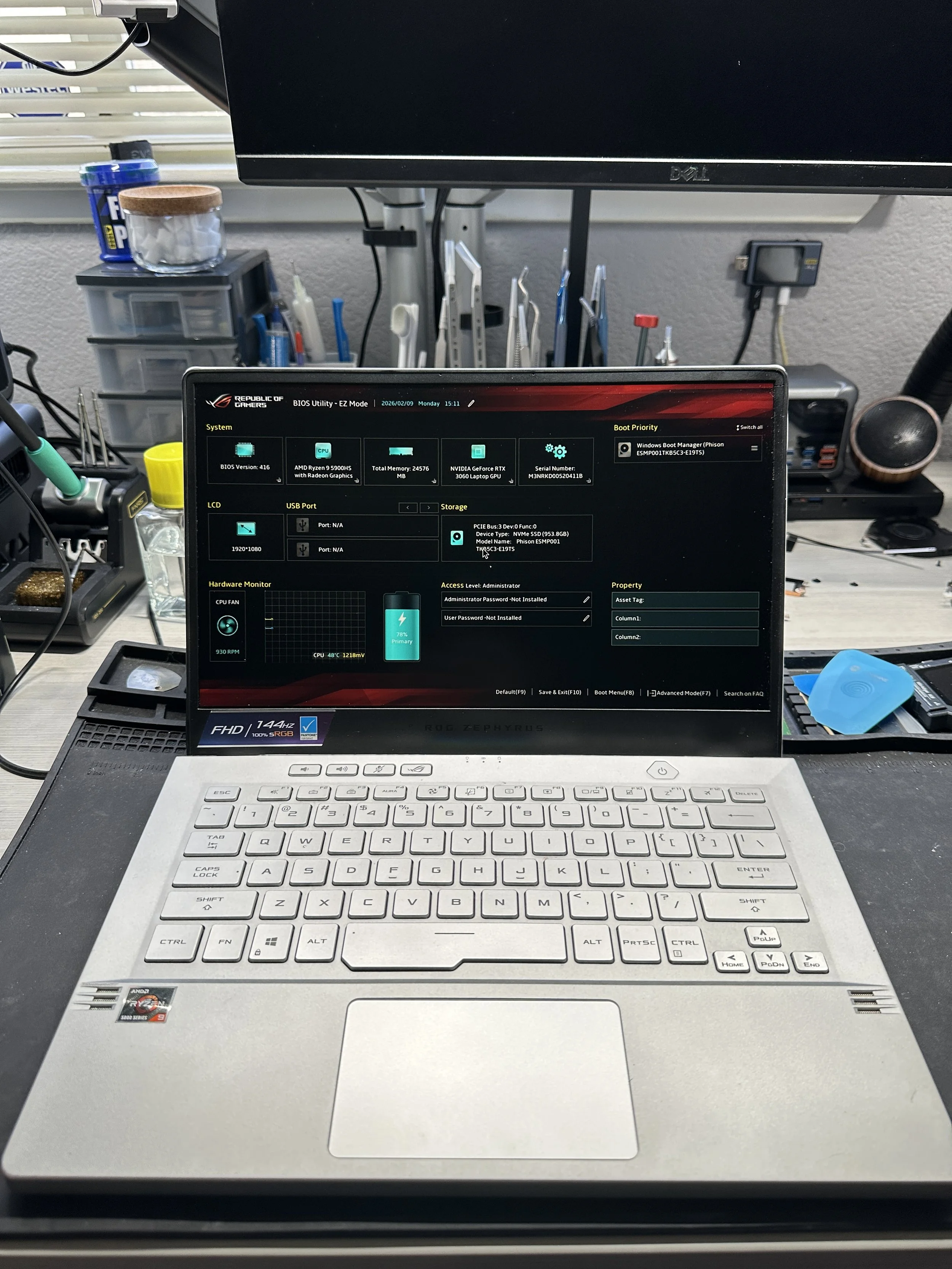
With the physical short circuit eradicated and insulation integrity restored, the motherboard was reassembled into its chassis. Upon testing, validation benchmarks yielded the following results:
- Instant Initialization: The standby rail turned on, and internal battery charging state indicators illuminated normally.
- Successful POST: The system passed sequence testing instantly, cleanly displaying the ASUS ROG boot animation logo.
- Stress Validated: Thermal testing and loop stress benchmarks were run for 12 hours under high load profiles to verify optimal temperature thresholds.
Instead of requiring a prohibitively expensive motherboard replacement through the manufacturer, this ASUS Zephyrus G14 was restored to perfect operational condition at a fraction of the cost, securing all of the client's localized files and settings intact.
Experiencing a Similar Gaming Laptop Issue?
Don't spend hundreds on an entirely new motherboard. Our expert component-level micro-soldering technicians specialize in recovering dead devices safely.
Start Your Mail-In Repair